Digital Profit Studio
Horror Gamebook Architect GPT
Horror Gamebook Architect GPT
Couldn't load pickup availability
Shopify Product Description
Horror Gamebook Architect
Create slow-burning horror worlds, branching fiction systems, and atmospheric gamebook concepts with a literary edge. 🕯️📚
Horror Gamebook Architect is a custom GPT designed to help writers, creators, and digital product sellers build immersive interactive horror fiction with depth, atmosphere, and structure.
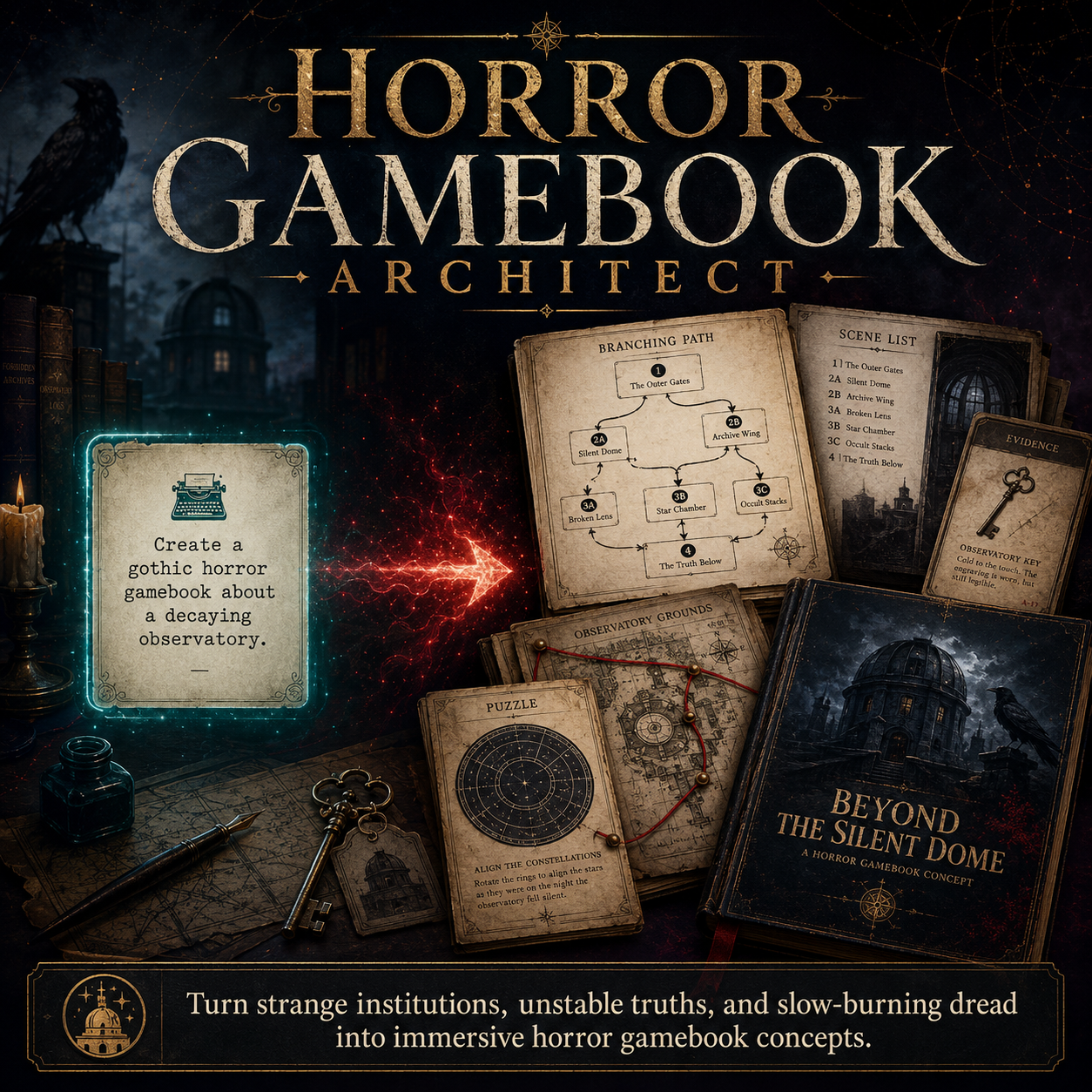
This GPT helps you create branching horror narratives, investigative gamebook frameworks, interpretive puzzle systems, evidence trails, multiple endings, literary horror worlds, and marketplace-ready horror concepts that feel intelligent, unsettling, and memorable.
It is built for creators who want horror with tension, mystery, symbolism, and atmosphere. Think fogged coastlines, corrupted archives, impossible maps, rewritten records, abandoned institutions, strange rituals, and systems that quietly reshape reality.
What This GPT Helps You Create 🗝️
Use Horror Gamebook Architect to generate detailed horror gamebook concepts across subgenres such as:
Gothic horror
Folk horror
Psychological horror
Institutional horror
Maritime horror
Historical horror
Bureaucratic horror
Literary investigative horror
Atmospheric branching fiction
Choice-driven narrative systems
You can use it to build full gamebook frameworks or individual pieces of a larger project, depending on where you are in your creative process.
Perfect For Slow-Burning Horror Concepts
This GPT is designed for horror that builds through atmosphere, contradiction, and discovery.
Instead of relying on constant action or graphic scenes, it helps you create fear through unstable truths, strange institutions, unreliable evidence, and quiet systems of control.
You can create stories where maps contradict geography, archives contain incompatible histories, communities enforce impossible beliefs, records change overnight, and official classifications determine whether people exist at all.
What You Can Generate ✨
Horror Gamebook Architect can help you create:
Full horror gamebook frameworks
Branching story paths
Scene structures
Choice systems
Evidence systems
Interpretive puzzle ideas
Atmospheric locations
Cast lists
Protagonist concepts
Multiple endings
Gamebook titles and subtitles
Marketplace descriptions
Series hooks and sequel ideas
Metadata-friendly keyword phrasing
This makes it ideal for building interactive fiction, printable gamebooks, digital downloads, writing products, anthology concepts, creative writing packs, and horror story development resources.
How It Works
Start by choosing the type of horror world you want to create.
You might ask for a Gothic academic horror gamebook, a coastal folk horror investigation, a railway bureaucratic horror concept, a monastery archive mystery, or a maritime horror story set around duplicated islands.
Then you can define the core fear behind the story.
For example, the fear might come from records changing overnight, maps that refuse to match the land, an institution hiding contradictory histories, or a community protecting an official version of reality that no longer makes sense.
From there, the GPT can help you build the story structure, puzzle logic, evidence trail, endings, and marketplace packaging.
Example Requests You Can Try 💡
“Create a Gothic horror gamebook set inside a decaying observatory where weather records predict disappearances.”
“Generate a literary folk horror narrative involving ritualized census counting in an isolated mountain valley.”
“Create six interpretive puzzles for a maritime horror gamebook involving duplicated islands.”
“Write multiple endings for a bureaucratic horror investigation involving rewritten legal identities.”
“Generate atmospheric evidence items for a monastery archive horror story.”
Best Results Come From
Horror Gamebook Architect works especially well when you give it a specific setting, an institution, a contradiction, and a strange system of control.
Strong foundations might include a census bureau erasing streets from official maps, a monastery preserving rewritten scripture, a hospital redefining illness to protect quotas, a lighthouse authority tracking duplicate coastlines, or a university archive hiding incompatible histories.
The more specific the premise, the richer the atmosphere becomes.
Ideal For 🕯️
Writers
Interactive fiction creators
Horror authors
Gamebook creators
Digital product sellers
Creative writing resource creators
Worldbuilding enthusiasts
Anthology planners
Story prompt creators
Narrative designers
You Will Receive
Access to Horror Gamebook Architect
A quick start guide
Example request prompts
Guidance for creating full gamebook frameworks
Support for story structure, puzzles, endings, evidence, titles, and marketplace positioning
Important Note
Horror Gamebook Architect is built for atmospheric, literary, psychologically unsettling horror. It is designed to support immersive storytelling, investigative tension, and slow-building dread while keeping the focus on structure, mystery, interpretation, and worldbuilding.
Share